Thoughts on data science, statistics and machine learning.
Book Review: In Dubious Battle - John Steinbeck
I have a pretty good Steinbeck collection, but this wasn’t a book I was going to read anytime soon. But I recently came across the movie adaptation and decided that other Steinbeck titles could wait. James Franco and John Steinbeck is a very attractive combination.
First of all, this book is not about communism. The eponymous battle is not a battle of the classes. It’s more of a battle men fight with themselves. The Communist Party is just a minor device in the plot. A much bigger and apparent device is collectivism. After all, in East of Eden, Steinbeck has defended passionately the creative spirit of the individual mind, so a collectivist is perhaps the last thing he’d be.
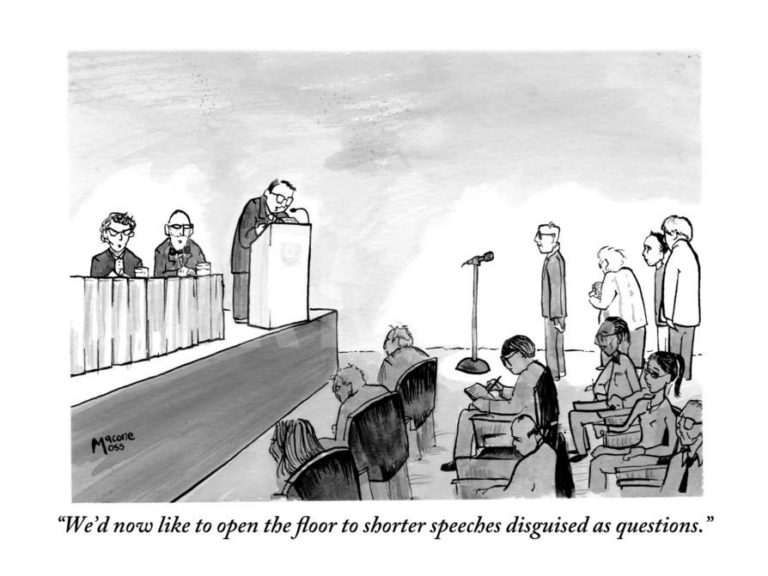
How Not to Ask Questions After a Talk
Dedicated to the memory of Mrutyunjay Mishra (M2). He was a torrent of ideas. He encouraged me to write this post because as much as he talked endlessly without pausing to breathe, he hated wasteful discourse.
New Delhi, January 2024
PyCon India 2017 ended last weekend in Delhi. The conference escaped the infamous winter smog-storm by a whisker. In the last few years, PyCon India has grown to become the largest PyCon outside of North America, with over a thousand participants attending from all over the country. The conference itself was driven by a team of about 50 volunteers.
Book Review: The View from the Cheap Seats - Neil Gaiman
I can’t think of a single fantasy character that would be Neil Gaiman. I’m tempted to think that he’s like Santa Claus, but he’s not the sort who’d care if someone was being naughty. He’s not Dumbledore or Gandalf either - he’d rather be your friend than your mentor. He’s not even the Dream of the Endless, since he’s not aware of how powerful he is.
Reading Gaiman’s nonfiction is like meditation that clears and even expands your mind. It’s like a cool refreshing drink after a long day of rigour (I read The View From the Cheap Seats after the underwheling chore of reading Joseph Conrad’s Heart of Darkness). This book is satisfying and disquieting at the same time. You will discover a lot more to read, and at the same time, reading Gaiman has a normalizing effect on whatever you have read. I think Gaiman has unwittingly achieved a standardization of literature that ought to be widely adopted. The book is scattered with dreamy encounters with giants like Stephen King and Terry Pratchett (among many more), punctuated with brutal shocks that he felt about the Syrain refugee crisis or Charlie Hedbo, grounded by his account of the bauble of the Oscars. What he doesn’t deal in is mediocrity and trivia.
Playing With the Konmari Method
I heard about the bestseller The Life-Changing Magic of Tidying Up at a SciPy talk about deculttering your data science project. The speakers admitted they hadn’t read it - they were simply trying to point out that tidying up your space and tidying up your software project are both similar.
I’ve been married and living with my wife for about a year now. After we moved into “our own home” last year, we have both undergone major role reversals when it comes to tidying up. I was never accustomed to spaces larger than a single bedroom, so I never cared enough to sort or declutter my space as long as my desk and bed were clean. As for my wife, she never owned too much stuff (between the two of us, I’m the hoarder) and therefore never had to make a chore out of tidying up. Now that I live in a fairly spacious apartment, even a little clutter looks very conspicuous to me. My wife generally agrees with me about tidying up, but she’s not anal about it. I have been having arguments about the clutter in my house with her for a long time now. Since both of us jokingly say that I’m the wife in this relationship (by the way, I would be proud to be one), tidying up and decluttering is often left up to me. I lost no time in buying Marie Kondo’s book and diving right in.